Bob Allen Ford Pleasanton

Blog

Ford Oil Change Guide: Mileage, Oil Type and Warning Signs

bob allen service

Regular oil changes are one of the most important parts of maintaining your Ford vehicle. Whether you drive a Ford F-150, Escape, Explorer, Bronco, or another model, keeping up with routine oil changes helps protect your engine, maintain performance, and support long-term reliability.


But how often should you change your Ford's oil? Does your vehicle need synthetic oil? And what warning signs should you look for between service visits?

At Bob Allen Ford Pleasanton, we proudly help drivers from Pleasanton, Mound City, Fort Scott, Paola, Iola, Garnett, and surrounding Kansas communities keep their Ford vehicles running smoothly with professional oil changes and routine maintenance services.

How Often Should You Change Your Ford's Oil?

One of the most common questions Ford owners ask is how often to change Ford oil. While older recommendations often suggested an oil change every 3,000 miles, many newer Ford vehicles feature an Intelligent Oil-Life Monitor that helps determine when an oil change is needed.

Rather than relying on mileage alone, this system considers driving conditions and vehicle usage to estimate remaining oil life.
For example, Ford provides the following general oil change mileage guidelines for certain vehicles:
  • Normal driving: Approximately 7,500–10,000 miles.
  • More demanding driving: Oil changes may be needed sooner depending on operating conditions.
  • Time-based maintenance: Some Ford models specify a maximum interval of one year or 10,000 miles, whichever comes first.
Always follow the maintenance schedule in your specific Ford owner's manual, as recommendations vary by model and engine.

What Factors Affect Your Ford Oil Change Interval?


Your driving habits can influence how quickly engine oil breaks down. Certain conditions may require more frequent maintenance, including:
  • Frequent short trips that prevent the engine from reaching operating temperature.
  • Extended periods of idling or stop-and-go traffic.
  • Frequent towing or carrying heavy loads.
  • Driving in extremely hot or cold temperatures.
  • Regular off-road driving or traveling through dusty conditions.
If you regularly experience these conditions around Pleasanton and Southeast Kansas, keep an eye on your oil-life monitor and follow your vehicle's maintenance recommendations.

What Is the Ford Recommended Oil Type?


Choosing the right engine oil is just as important as changing it on schedule. Different Ford models and engines require specific oil viscosities and performance specifications.

Depending on your vehicle, the Ford recommended oil type may include 5W-20, 5W-30, 0W-20, or another viscosity.
For example, a Ford F-150 may have different oil requirements depending on its engine and model year. The same is true for Ford SUVs like the Explorer, Escape, and Bronco.

Before purchasing oil or scheduling service, check your owner's manual or consult a knowledgeable Ford service technician to make sure you're using the correct product.

Does Your Ford Need Synthetic Oil?


Many newer Ford vehicles require or recommend synthetic blend or full synthetic engine oil that meets specific Ford performance standards.

Ford synthetic oil offers several potential benefits:
  • Engine protection: Helps reduce friction and wear between moving engine components.
  • Temperature performance: Provides lubrication across a range of operating temperatures.
  • Engine cleanliness: Helps resist sludge and deposit buildup.
  • Long-term performance: Helps maintain proper lubrication when used according to manufacturer specifications.

The important thing is choosing oil that meets your engine's requirements. Full synthetic oil isn't automatically the right choice for every Ford model.

At Bob Allen Ford Pleasanton, our service department offers synthetic motor oil replacement and oil filter replacement to help keep your vehicle properly maintained.

Understanding Ford Oil Change Mileage

Mileage is a helpful way to track maintenance, but it isn't the only factor that determines when your Ford needs an oil change.

Many newer models feature Ford's Intelligent Oil-Life Monitor, which calculates oil life based on factors such as engine temperature, driving conditions, and vehicle usage.

When the system determines that an oil change is needed, a notification will appear on your instrument cluster.
Depending on your vehicle, you may see messages such as:
  • Engine Oil Change Due
  • Change Engine Oil Soon
  • Oil Change Required
When this notification appears, schedule service promptly. Certain Ford owner's manuals recommend completing the oil change within two weeks or 500 miles after the alert.

It's also important to reset the oil-life monitoring system after every oil change so it can accurately track your next service interval.

7 Ford Oil Change Warning Signs to Watch For

Your vehicle may show signs that an oil change or engine inspection is needed before you reach your expected service mileage. Recognizing these warning signs can help you address potential maintenance issues before they become more serious.

Here are seven signs Ford owners should watch for.

1. Oil Change Warning Light or Dashboard Message

One of the clearest Ford oil change warning signs is a notification on your dashboard. If your vehicle displays an oil change reminder, it's time to schedule routine maintenance.

Keep in mind that an oil-life reminder is different from a red oil pressure warning light. If the red oil pressure warning appears while driving, safely stop the vehicle and shut off the engine. Continuing to drive with low oil pressure can cause serious engine damage.

2. Dark or Dirty Engine Oil

Engine oil naturally becomes darker as it circulates through the engine and collects contaminants. However, oil that appears unusually thick, gritty, or contaminated may need attention.

Checking your oil level and condition periodically can help you identify potential problems.

3. Unusual Engine Noises

Engine oil helps lubricate moving components and reduce friction. When oil levels are too low or lubrication is inadequate, you may notice knocking, ticking, or other unusual engine noises.

These sounds shouldn't be ignored. Have your Ford inspected to determine the cause.

4. Burning Oil Smell

A noticeable burning oil smell may indicate an oil leak or oil contacting hot engine components. While an oil change alone may not resolve the issue, a technician can inspect your engine for leaks and other concerns.

5. Excessive Exhaust Smoke

Blue or gray exhaust smoke can indicate that your engine is burning oil. This may point to an underlying mechanical issue that requires professional attention.

If you notice persistent smoke, schedule an inspection.

6. Decreased Engine Performance

Old or insufficient engine oil can affect lubrication and contribute to increased friction. You may notice unusual engine behavior, reduced efficiency, or changes in overall performance.

An oil change and maintenance inspection can help determine whether overdue maintenance is contributing to the issue.

7. Oil Leaks Under Your Vehicle


If you notice dark brown or black fluid beneath your parked Ford, you may have an engine oil leak.
Check your oil level and have the source of the leak inspected. Simply adding oil without addressing an active leak may not solve the underlying problem.

Why Regular Ford Oil Changes Matter

Staying current with oil changes helps protect your engine and maintain reliable vehicle performance.
Routine Ford oil changes provide several important benefits:
  • Reduces engine wear: Proper lubrication helps protect internal engine components.
  • Supports engine performance: Clean oil helps your engine operate as designed.
  • Helps prevent buildup: Regular service helps manage contaminants and deposits.
  • Supports engine longevity: Following recommended maintenance intervals helps protect your investment.
  • Provides an opportunity for inspection: Oil change appointments can also include checks for other maintenance concerns.
Whether you're commuting around Pleasanton, traveling through Linn County, or using your Ford for towing and hauling, regular maintenance is essential.

Schedule a Ford Oil Change at Bob Allen Ford Pleasanton

Keeping up with your Ford oil change schedule doesn't have to be complicated. Following your vehicle's recommended maintenance intervals, using the correct engine oil, and recognizing early warning signs can help keep your Ford running smoothly.

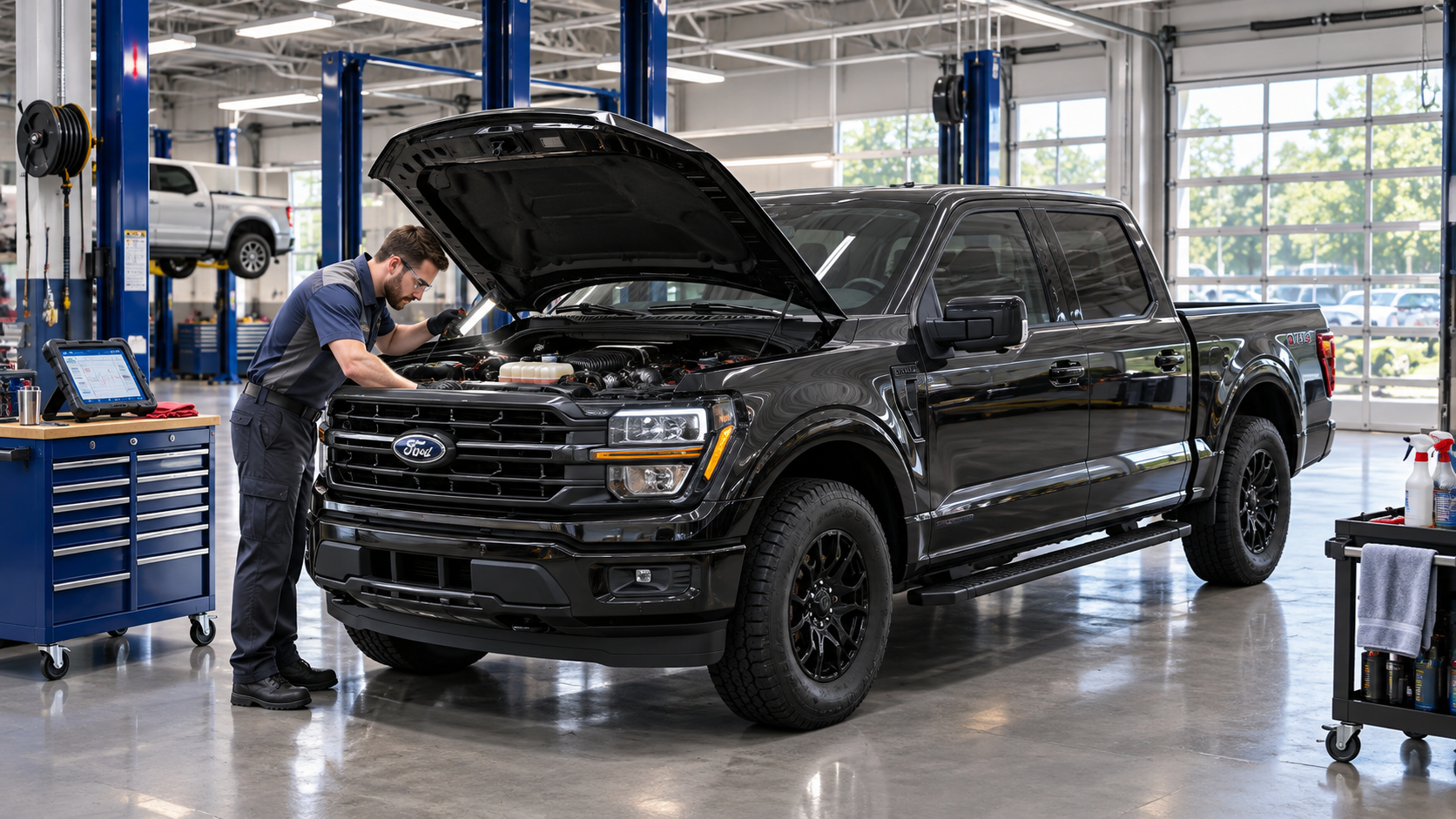
At Bob Allen Ford Pleasanton, our Ford-trained technicians are here to help with routine maintenance and repair needs. From synthetic motor oil replacement and oil filter changes to preventative maintenance and engine diagnostics, our service department is equipped to help keep your vehicle on the road.

We proudly serve Ford owners in Pleasanton, Mound City, Iola, and surrounding Kansas communities.
Don't wait until a dashboard warning or unusual engine noise interrupts your plans. Visit Bob Allen Ford Pleasanton or schedule your next appointment online!

Schedule Service: https://www.boballenfordpleasanton.com/service.aspx

Visit Us:
Bob Allen Ford Pleasanton
427 Cobra Drive
Pleasanton, KS 66075
913-352-8521

Frequently Asked Questions About Ford Oil Changes

How often should I change my Ford oil?

Many newer Ford vehicles have oil change intervals that can range from approximately 7,500 to 10,000 miles under normal driving conditions. More demanding driving conditions may require more frequent service. Always follow your vehicle's Intelligent Oil-Life Monitor and owner's manual.

What is the recommended oil type for Ford vehicles?

The recommended oil type varies by model, engine, and model year. Some Ford engines require 5W-20, 5W-30, or 0W-20, while others have different specifications. Check your owner's manual for the correct oil.

Does Ford recommend full synthetic oil?

Many newer Ford engines require or recommend synthetic blend or full synthetic oil that meets specific Ford performance standards. The correct choice depends on your engine's requirements.

How many miles can a Ford go between oil changes?

Depending on the model and driving conditions, some Ford vehicles may go approximately 7,500–10,000 miles between oil changes. Towing, frequent idling, and extreme temperatures can shorten that interval.

What happens if I go too long without changing my Ford oil?

Delaying an oil change can allow contaminants and deposits to accumulate while reducing the oil's ability to protect engine components. Over time, this can contribute to increased engine wear and potentially expensive repairs.

How do I know when my Ford needs an oil change?

Watch for dashboard oil-life notifications, unusual engine noises, burning oil smells, or changes in oil condition. Your Intelligent Oil-Life Monitor is one of the best tools for tracking routine oil change needs.

Where can I get a Ford oil change in Pleasanton, KS?

Bob Allen Ford Pleasanton offers oil changes, synthetic motor oil replacement, oil filter replacement, and other preventative maintenance services. Visit our service department at 427 Cobra Drive in Pleasanton, Kansas, to schedule your next appointment.

Recommended Posts

Maverick

2026 Ford Maverick vs. Ranger: Which Truck Is Worth Buying?

If you are shopping for Ford trucks in Eastern Kansas, you have likely noticed that midsize and compact pickups are more capable, refined, and versatile than ever. Two of the most compelling options on the market right now are the 2026 Ford Maverick and the 2026 Ford Ranger. While both belong to the legendary Built Ford Tough family, they are designed for very different drivers, lifestyles, and jobs. Choosing the right one comes down to how you plan to use your bed, your trailer, and your daily commute around Linn County and beyond. Whether you are looking for a Ford Maverick for sale or considering a stepped-up midsize truck, here is a detailed breakdown to help you decide which truck is worth your investment. At a Glance: 2026 Ford Maverick vs. 2026 Ford Ranger Feature 2026 Ford Maverick 2026 Ford Ranger Class Compact Pickup Midsize Pickup Body Construction Unibody Body-on-Frame Base Engine 2.5L Full Hybrid (FWD/AWD) 2.3L EcoBoost® I-4 (4x2/4x4) Available Engines 2.0L EcoBoost® Gas (250 hp / 280 lb-ft) 2.7L EcoBoost® V6 & 3.0L V6 (Raptor) Max Towing Up to 4,000 lbs (with 4K Tow Package) Up to 7,500 lbs (properly equipped) Max Payload Up to 1,500 lbs Up to 1,805 lbs Fuel Economy Up to 42 MPG City (Hybrid) Up to 21 City / 25 Hwy (Est.) Starting Character Urban commuter, DIY favorite, daily driver Heavy-duty weekend warrior, serious towing, off-road trails 2026 Ford Maverick: Efficiency, Value, and Urban Agility The 2026 Ford Maverick continues to redefine what an everyday pickup can be. Built on a unibody platform, it drives with the smoothness and easy handling of a crossover while giving you a surprisingly capable 4. 5-foot bed. Highlights of the 2026 Maverick: Unbeatable Fuel Economy: With its standard 2. 5L Hybrid powertrain, the Maverick delivers an estimated 42 MPG in the city, making it an ideal choice for long commutes across Kansas. Modern Interior Tech: The standard 13. 2-inch center touchscreen powered by SYNC® 4 brings large-screen navigation, wireless Apple CarPlay®, and Android Auto™ to every trim level. FLEXBED® Versatility: The modular bed design features built-in slots for 2x4s, threaded holes for tie-downs, and available Pro Power Onboard™ 110V outlets for power tools or camping gear. Street & Off-Road Personalities: From the performance-focused Lobo™ sport trim to the trail-ready Tremor® with elevated ground clearance and twin-clutch AWD, there is a Maverick tailored to every driving style. Best For: Commuters, DIY homeowners, light equipment haulers, and drivers who want the utility of a truck bed without truck-sized fuel bills. 2026 Ford Ranger: Frame-Built Strength and Serious Towing For buyers who need traditional truck muscle, the 2026 Ford Ranger steps up with full body-on-frame construction. It bridges the gap between compact pickups and full-size workhorses like the F-150. Highlights of the 2026 Ranger: Massive Towing Capability: When equipped with the Trailer Tow Package, the Ranger can tow up to 7,500 lbs, easily pulling midsize boats, travel trailers, livestock trailers, or heavy machinery. Upgraded Comforts for 2026: New additions for 2026 include an available Power Moonroof on XLT and Lariat trims, SiriusXM 360L, and the expansion of the FX4 Off-Road Package down to the entry-level XL trim. V6 Powertrain Options: Beyond the punchy 2. 3L EcoBoost®, buyers can upgrade to the 2. 7L EcoBoost® V6 for effortless highway merging and heavy hauling under load. True Off-Road Dominance: With standard low-range 4x4 options, skid plates, and the high-performance Ranger Raptor variant, the Ranger handles mud, gravel, and unpaved county roads with complete confidence. Best For: Outdoor enthusiasts with heavy boats or campers, contractors who haul tools and job site materials daily, and drivers needing real 4x4 ground clearance. How to Decide: Maverick vs. Ranger To pick the winner for your driveway, ask yourself three simple questions: How much weight do you tow? If your trailer weighs under 4,000 lbs (jet skis, small utility trailers, pop-up campers), the Maverick with the 4K Tow Package is plenty. If your trailer is over 4,000 lbs, the Ranger's 7, 500-lb limit is a necessity. What is your daily drive like? If you drive 30+ miles a day for work or running errands, the Maverick's 40+ MPG hybrid efficiency will save you hundreds at the pump every year. If your daily drive takes you through rutted pastures or heavy mud roads, the Ranger's frame clearance and heavy-duty suspension shine. What is your budget priority? The Maverick offers one of the lowest entry points in the entire pickup market. The Ranger costs more upfront but rewards you with midsize frame strength, higher payload thresholds, and greater torque. Find Your Next Ford Truck Near Pleasanton, KS Choosing between these two standout trucks comes down to experiencing them from behind the wheel. If you are looking for a trusted Ford dealership in Pleasanton, KS or searching for a dedicated Ford dealer in Kansas, visiting a local showroom allows you to compare bed sizes, test drive hybrid vs. EcoBoost powertrains, and explore available inventory first-hand.

Used SUV

What Is a Good Mileage for a Used SUV?

When shopping for a pre-owned vehicle, mileage is often the first metric buyers evaluate. Modern vehicle manufacturing, synthetic lubricants, and advanced engine technology have changed the rules of thumb. Finding the best mileage for a used SUV isn't just about picking the lowest number on the odometer-it’s about balancing mileage, vehicle condition, and documented maintenance history. This used SUV buying guide breaks down what numbers you should look for, how mileage impacts reliable models, and how to shop smart. The Rule of Thumb: Annual Average Mileage The average American driver logs roughly 12,000 to 15,000 miles per year. When evaluating a pre-owned vehicle, calculate its expected mileage based on its age: 3 Years Old: 36,000 to 45,000 miles 5 Years Old: 60,000 to 75,000 miles 7 Years Old: 84,000 to 105,000 miles If an SUV's odometer falls within or below these windows, it’s generally considered to have "good mileage" for its age. Mileage vs. Condition: Why Maintenance Trumps Odometer Readings A well-maintained SUV with 90,000 highway miles is often a better purchase than a 40,000-mile vehicle that missed routine oil changes or endured heavy stop-and-go city traffic. Low Mileage (Under 50,000 Miles) Pros: Less mechanical wear and tear, newer technology, often covered by remaining factory or certified pre-owned warranties. Cons: Higher initial purchase price. Moderate Mileage (50,000 to 100,000 Miles) Pros: Significant depreciation has already occurred, offering high value for your money. Modern powertrains easily run well past 150,000+ miles with basic upkeep. Cons: May require upcoming routine wear-and-tear maintenance like new tires, brake pads, or transmission fluid refreshes. High Mileage (Over 100,000 Miles) Pros: Budget-friendly pricing and lower insurance costs. Cons: Higher probability of component replacement (shocks, struts, water pumps, or alternators). Best Mileage Targets for Popular Pre-Owned Ford SUVs Ford SUVs are built with long-term durability in mind. Here is what to look for when shopping popular Ford models: 1. Used Ford Escape (Compact SUV) Ideal Mileage Target: Under 75,000 miles. Why It’s a Great Pick: The EcoBoost® engine options offer fuel efficiency for daily commutes. Look for models with complete service records to ensure turbochargers and transmissions were properly maintained. 2. Used Ford Edge (Midsize 2-Row SUV) Ideal Mileage Target: 50,000 to 90,000 miles. Why It’s a Great Pick: Offering a spacious cabin and smooth highway ride, a used Ford Edge delivers great comfort for cross-state travel without breaking the bank. 3. Used Ford Explorer (Family 3-Row SUV) Ideal Mileage Target: 60,000 to 100,000 miles. Why It’s a Great Pick: As one of America's favorite family haulers, a used Ford Explorer handles towing, family road trips, and all-weather driving with ease. Your Trusted Local Used SUV Destination At Bob Allen Ford, we carefully inspect every pre-owned vehicle on our lot to ensure it meets strict quality standards before you take the keys. We proudly serve drivers throughout Pleasanton, Fort Scott, La Cygne, Mound City, Paola, Louisburg, and Southeast Kansas with transparent pricing and dependable inventory. Whether you are looking for a reliable used car dealership Pleasanton drivers depend on or want to visit an authorized Ford dealer to compare models, our team is here to help you navigate your options. Find Your Next SUV Today Ready to explore high-quality pre-owned SUVs with verified service histories? Browse Pre-Owned SUV Inventory at Bob Allen Ford Pleasanton or stop by our showroom on Cobra Drive to schedule a test drive!

Ford F-150 Towing

How Much Can a 2026 Ford F-150 Tow? Towing & Payload Guide

The 2026 Ford F-150 remains a leader in full-size truck capability. When properly configured, the Ford F-150 towing capacity reaches a maximum of 13,500 lbs., while the Ford F-150 payload capacity tops out at 2,440 lbs. At Bob Allen Ford Pleasanton, we proudly serve drivers from Olathe, Fort Scott, Mound City, Louisburg, and surrounding Kansas communities who need dependable truck performance for work and recreation. 2026 Ford F-150 Towing & Payload Specs by Engine Your total towing and payload limits depend on the powertrain, cab setup, and axle ratio selected. Below is the quick reference breakdown for the 2026 lineup: Engine Option Max Towing Capacity Max Payload Capacity 2.7L EcoBoost® V6 8,400 lbs 1,775 lbs 5.0L Ti-VCT V8 12,900 lbs 2,225 lbs 3.5L EcoBoost® V6 13,500 lbs 2,440 lbs 3.5L PowerBoost® Full Hybrid V6 11,200 lbs 1,750 lbs High-Output 3.5L EcoBoost® V6 (Raptor) 8,200 lbs 1,400 lbs 5.2L Supercharged V8 (Raptor R) 8,700 lbs 1,400 lbs Key Towing & Hauling Features Power is only part of the equation; Ford integrates smart technology to make trailering safer and simpler: Pro Trailer Backup Assist™: Allows you to direct trailer movement using an intuitive dashboard knob. Onboard Scales & Smart Hitch: Measures load weight directly in the truck bed and estimates trailer tongue weight to avoid overloading. Pro Power Onboard™: Turns the F-150 into a mobile generator, offering up to 7.2kW of exportable power on hybrid models to run job-site tools or campsite gear. Find Your Next F-150 at Bob Allen Ford Pleasanton Whether you are pulling a camper through eastern Kansas or loading up heavy cargo for a job in Olathe or Fort Scott, our team can help you configure the right axle ratio, cab size, and tow package for your needs. As one of the area's premier Ford dealerships, Bob Allen Ford Pleasanton offers an extensive selection of new F-150 models to drivers in Louisburg, Mound City, and beyond. Visit our showroom or contact our sales team today to schedule a test drive!